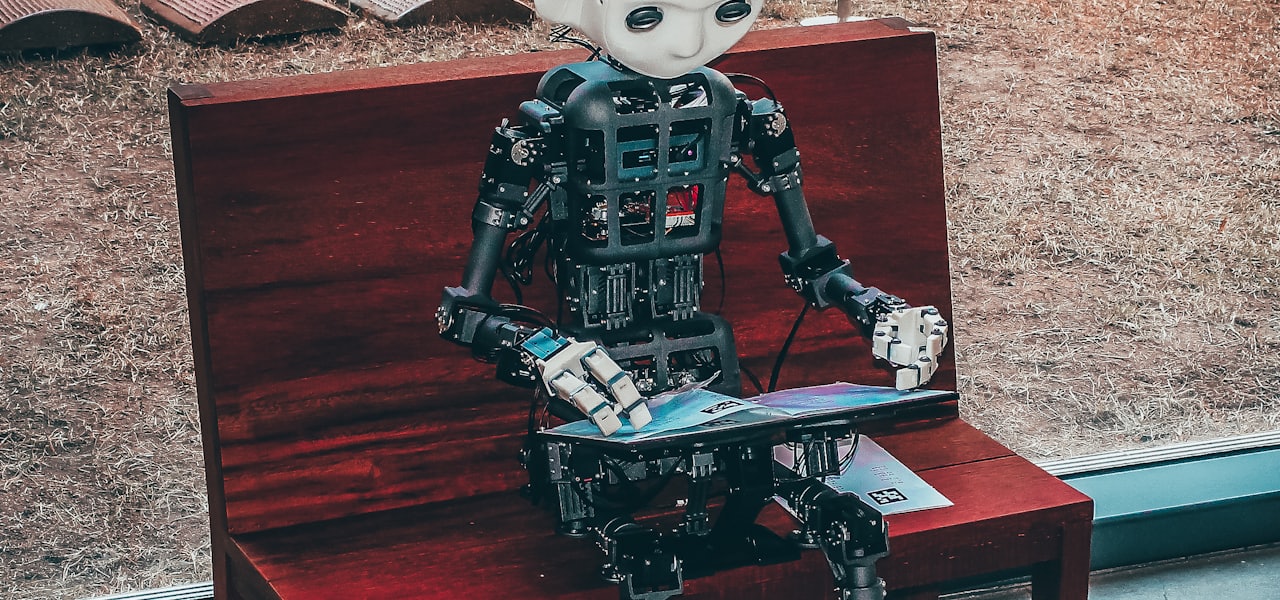
A single customer view is an aggregated, consistent and holistic representation of the data held by an organisation about its customers that can be viewed in one place, such as a single page. The advantage to an organisation of attaining this unified view comes from the ability it gives to analyse past behaviour in order to better target and personalise future customer interactions. A single customer view is also considered especially relevant where organisations engage with customers through multichannel marketing, since customers expect those interactions to reflect a consistent understanding of their history and preferences. However, some commentators have challenged the idea that a single view of customers across an entire organisation is either natural or meaningful, proposing that the priority should instead be consistency between the multiple views that arise in different contexts. Where representations of a customer are held in more than one data set, achieving a single customer view can be difficult: firstly because customer identity must be traceable between the records held in those systems, and secondly because anomalies or discrepancies in the customer data must be data cleansed for data quality. As such, the acquisition by an organisation of a single customer view is one potential outcome of successful master data management. Since 31 December, 2010, maintaining a single customer view, and submitting it within 72 hours, has become mandatory for financial institutions in the United Kingdom due to new rules introduced by the Financial Services Compensation Scheme.
Auralization
Auralization is a procedure designed to model and simulate the experience of acoustic phenomena rendered as a soundfield in a virtualized space. This is useful in configuring the soundscape of architectural structures, concert venues, and public spaces, as well as in making coherent sound environments within virtual immersion systems. == History == The English term auralization was used for the first time by Kleiner et al. in an article in the journal of the AES en 1991. The increase of computational power allowed the development of the first acoustic simulation software towards the end of the 1960s. == Principles == Auralizations are experienced through systems rendering virtual acoustic models made by convolving or mixing acoustic events recorded 'dry' (or in an anechoic chamber) projected within a virtual model of an acoustic space, the characteristics of which are determined by means of sampling its impulse response (IR). Once this h ( t ) {\displaystyle h(t)} has been determined, the simulation of the resulting soundfield s ( t ) {\displaystyle s(t)} in the target environment is obtained by convolution: r ( t ) = h ( t ) ∗ s ( t ) {\displaystyle r(t)=h(t)s(t)} The resulting sound r ( t ) {\displaystyle r(t)} is heard as it would if emitted in that acoustic space. == Binaurality == For auralizations to be perceived as realistic, it is critical to emulate the human hearing in terms of position and orientation of the listener's head with respect to the sources of sound. For IR data to be convolved convincingly, the acoustic events are captured using a dummy head where two microphones are positioned on each side of the head to record an emulation of sound arriving at the locations of human ears, or using an ambisonics microphone array and mixed down for binaurality. Head-related transfer functions (HRTF) datasets can be used to simplify the process insofar as a monaural IR can be measured or simulated, then audio content is convolved with its target acoustic space. In rendering the experience, the transfer function corresponding to the orientation of the head is applied to simulate the corresponding spatial emanation of sound.
Woken Furies
Woken Furies (2005) is a science fiction novel by British writer Richard Morgan. It is the third novel featuring the anti-hero Takeshi Kovacs and is the sequel to Broken Angels. This addition to the series casts light upon Kovacs' early life providing information on his post-envoy activities. Morgan's official website and interviews suggest that Woken Furies could be the last Kovacs novel, although in 2018 (before Netflix cancelled the show) Morgan stated that the Netflix adaptation has "kind of woken it all up again" after all these years, making him possibly reconsider being done with Kovacs. == Plot == Takeshi Kovacs finds himself in a new "sleeve," or human body, back on his home planet of Harlan's World. He is on the run after making numerous attacks against the Knights of the New Revelation, an extremist religious order responsible for the death of his lost love and her daughter. Because she had violated tenets about resleeving, her executioners dropped her and her daughter's cortical stacks in the sea, effectively preventing them from being resleeved (into new bodies). While trying to secure passage after his most recent attack, Kovacs saves a woman named Sylvie from a group of religious zealots. In return, she allows him to take refuge with her mercenary "deCom" crew as they head out to decommission sentient military hardware that has run amok on the island of New Hokkaido (AKA New Hok). Sylvie is the "command head" of her crew, co-ordinating them during missions by using her biologically implanted circuitry and software. During one of these missions, Sylvie collapses, regains consciousness, and Kovacs realizes that her personality seems to have been replaced by that of long-dead revolutionary leader Quellcrist Falconer. Harlan's World is surrounded by automated "orbitals" which target flying objects, such as vehicles, with high-energy beam weapons known as "angelfire"; Falconer is believed to have died without a backup of her cortical stack when her getaway aircraft was destroyed by angelfire 300 years prior. When Sylvie's crew returns from New Hok, they discover a younger version of Kovacs has been illegally duplicated into a different body (AKA "double sleeved") and is hunting them on behalf of the Harlan family that rules the planet. Most of Sylvie's crew is killed and Sylvie/Quellcrist is captured. Kovacs schemes to rescue Sylvie by approaching old criminal associates of his, the Little Blue Bugs. The Little Blue Bugs mount a semi-successful attack on a Harlan fortress and rescue Sylvie/Quellcrist. Hiding from Harlan forces in a floating base, the neo-Quellists are sold out by its owner and recaptured. An assault by Kovacs and a single UN Envoy on the base ends badly when Kovacs is betrayed by the Envoy who was actually embedded with several colleagues. However, Sylvie/Quellcrist has established a connection with the orbitals and calls down angelfire, eliminating their captors. The younger Kovacs is killed in the aftermath. Sylvie explains that angelfire is a destructive recording device. Thus, in destroying Quellcrist and the helicopter carrying her, it copied her. When the technology of the deCom crews advanced far enough, her persona was able to insert itself into Sylvie's implants and co-exist in her body. The novel ends with Kovacs, Virginia Vidaura, and Sylvie/Quellcrist waiting to see if they can use Sylvie/Quellcrist's newfound connection to the orbitals and the expansion of a long-dormant genetic virus to turn the population against the ruling oligarchy.
Noise-based logic
Noise-based logic (NBL) is a class of multivalued deterministic logic schemes, developed in the twenty-first century, where the logic values and bits are represented by different realizations of a stochastic process. The concept of noise-based logic and its name was created by Laszlo B. Kish. In its foundation paper it is noted that the idea was inspired by the stochasticity of brain signals and by the unconventional noise-based communication schemes, such as the Kish cypher. == The noise-based logic space and hyperspace == The logic values are represented by multi-dimensional "vectors" (orthogonal functions) and their superposition, where the orthogonal basis vectors are independent noises. By the proper combination (products or set-theoretical products) of basis-noises, which are called noise-bit, a logic hyperspace can be constructed with D(N) = 2N number of dimensions, where N is the number of noise-bits. Thus N noise-bits in a single wire correspond to a system of 2N classical bits that can express 22N different logic values. Independent realizations of a stochastic process of zero mean have zero cross-correlation with each other and with other stochastic processes of zero mean. Thus the basis noise vectors are orthogonal not only to each other but they and all the noise-based logic states (superpositions) are orthogonal also to any background noises in the hardware. Therefore, the noise-based logic concept is robust against background noises, which is a property that can potentially offer a high energy-efficiency. == The types of signals used in noise-based logic == In the paper, where noise-based logic was first introduced, generic stochastic-processes with zero mean were proposed and a system of orthogonal sinusoidal signals were also proposed as a deterministic-signal version of the logic system. The mathematical analysis about statistical errors and signal energy was limited to the cases of Gaussian noises and superpositions as logic signals in the basic logic space and their products and superpositions of their products in the logic hyperspace (see also. In the subsequent brain logic scheme, the logic signals were (similarly to neural signals) unipolar spike sequences generated by a Poisson process, and set-theoretical unifications (superpositions) and intersections (products) of different spike sequences. Later, in the instantaneous noise-based logic schemes and computation works, random telegraph waves (periodic time, bipolar, with fixed absolute value of amplitude) were also utilized as one of the simplest stochastic processes available for NBL. With choosing unit amplitude and symmetric probabilities, the resulting random-telegraph wave has 0.5 probability to be in the +1 or in the −1 state which is held over the whole clock period. == The noise-based logic gates == Noise-based logic gates can be classified according to the method the input identifies the logic value at the input. The first gates analyzed the statistical correlations between the input signal and the reference noises. The advantage of these is the robustness against background noise. The disadvantage is the slow speed and higher hardware complexity. The instantaneous logic gates are fast, they have low complexity but they are not robust against background noises. With either neural spike type signals or with bipolar random-telegraph waves of unity absolute amplitude, and randomness only in the sign of the amplitude offer very simple instantaneous logic gates. Then linear or analog devices unnecessary and the scheme can operate in the digital domain. However, whenever instantaneous logic must be interfaced with classical logic schemes, the interface must use correlator-based logic gates for an error-free signal. == Universality of noise-based logic == All the noise-based logic schemes listed above have been proven universal. The papers typically produce the NOT and the AND gates to prove universality, because having both of them is a satisfactory condition for the universality of a Boolean logic. == Computation by noise-based logic == The string verification work over a slow communication channel shows a powerful computing application where the methods is inherently based on calculating the hash function. The scheme is based on random telegraph waves and it is mentioned in the paper that the authors intuitively conclude that the intelligence of the brain is using similar operations to make a reasonably good decision based on a limited amount of information. The superposition of the first D(N) = 2N integer numbers can be produced with only 2N operations, which the authors call "Achilles ankle operation" in the paper. == Computer chip realization of noise-based logic == Preliminary schemes have already been published to utilize noise-based logic in practical computers. However, it is obvious from these papers that this young field has yet a long way to go before it will be seen in everyday applications.
Transhuman Space
Transhuman Space (THS) is a role-playing game by David Pulver, published by Steve Jackson Games as part of the "Powered by GURPS" (Generic Universal Role-Playing System) line. Set in the year 2100, humanity has begun to colonize the Solar System. The pursuit of transhumanism is now in full swing, as more and more people reach fully posthuman states. In 2002, the Transhuman Space adventure "Orbital Decay" received an Origins Award nomination for Best Role-Playing Game Adventure. Transhuman Space won the 2003 Grog d'Or Award for Best Role-playing Game, Game Line or RPG Setting. == Setting == The game assumes that no cataclysm — natural or human-induced — swept Earth in the 21st century. Instead, constant developments in information technology, genetic engineering, nanotechnology and nuclear physics generally improved condition of the average human life. Plagues of the 20th century (like cancer or AIDS) have been suppressed, the ozone layer is being restored and Earth's ecosystems are recovering (although thermal emission by fusion power plants poses an environmental threat—albeit a much lesser one than previous sources of energy). Thanks to modern medicine humans live biblical timespans surrounded by various artificially intelligent helper applications and robots (cybershells), sensory experience broadcasts (future TV) and cyberspace telepresence. Thanks to cheap and clean fusion energy humanity has power to fuel all these wonders, restore and transform its home planet and finally settle on other heavenly bodies. Human genetic engineering has advanced to the point that anyone—single individuals, same-sex couples, groups of three or more—can reproduce. The embryos can be allowed to be developed naturally, or they can undergo three levels of tinkering: 1. Genefixing, which corrects defects; 2. Upgrades, which boost natural abilities (Ishtar Upgrades are slightly more attractive than usual, Metanoia Upgrades are more intelligent, etc.); and... 3. Full transition to parahuman status (Nyx Parahumans only need a few hours of sleep per week, Aquamorphs can live underwater, etc.) Another type of human genetic engineering, far more controversial, is the creation of bioroids, fully sentient slave races. People can "upload" by recording the simulation of their brains on computer disks. The emulated individual then becomes a ghost, an infomorph very easily confused with "sapient artificial intelligence". However, this technology has several problems as the solely available "brainpeeling" technique is fatal to the original biological lifeform being simulated, has a significant failure rate and the philosophical questions regarding personal identity remain equivocal. Any infomorph, regardless of its origin, can be plugged into a "cybershell" (robotic or cybernetic body), or a biological body, or "bioshell". Or, the individual can illegally make multiple "xoxes", or copies of themselves, and scatter them throughout the system, exponentially increasing the odds that at least one of them will live for centuries more, if not forever. This is also a time of space colonization. First, humanity (specifically China, followed by the United States and others) colonized Mars in a fashion resembling that outlined in the Mars Direct project. The Moon, Lagrangian points, inner planets and asteroids soon followed. In the late 21st century even some of Saturn's moons have been settled as a base for that planet's Helium-3 scooping operations. Transhuman Space's setting is neither utopia nor dystopia, however: several problems have arisen from these otherwise beneficial developments. The generation gap has become a chasm as lifespans increase. No longer do the elite fear death, and no longer can the young hope to replace them. While it seemed that outworld colonies would offer accommodation and work for those young ones, they are being replaced by genetically tailored bioroids and AI-powered cybershells. The concept of humanity is no longer clear in a world where even some animals speak of their rights and the dead haunt both cyberspace and reality (in form of infomorph-controlled bioshells or cybershells). And the wonders of high science are not universally shared — some countries merely struggle with informatization while others suffer from nanoplagues, defective drugs, implants and software tested on their populace. In some poor countries high-tech tyrants oppress their backward people. And in outer space all sort of modern crime thrives, barely suppressed by military forces. == Publication history == After the initial set of GURPS books that were published using the GURPS Lite, later publications such as Transhuman Space by David Pulver were labelled simply "Powered by GURPS" without using the name "GURPS" in the book title. Transhuman Space received a significant amount of supporting publications, and was the largest original background setting that Steve Jackson Games produced in 15 years. Shannon Appelcline noted that by its inclusion of posthuman characters, the book began to show the limits of the GURPS system as it was, which is something that Pulver would address soon thereafter. Steve Jackson Games has not updated the core book (GURPS Transhuman Space) to 4th edition, although the supplement Transhuman Space: Changing Times provides a path for migrating to 4th edition. It has produced several 4th edition supplements for the setting: Transhuman Space: Bioroid Bazaar, Transhuman Space: Cities on the Edge, Transhuman Space: Martial Arts 2100, Transhuman Space: Personnel Files 2-5, Transhuman Space: Shell-Tech, GURPS Spaceships 8: Transhuman Spacecraft, Transhuman Space: Transhuman Mysteries, and Transhuman Space: Wings of the Rising Sun. == Reception == In a review of Transhuman Space in Black Gate, William Stoddard said "Transhuman Space was a richly detailed setting; if it had imperfections, it had enough depth to make up for them. I think it has the potential to become a classic in its field. Perhaps a campaign set in its default start year of 2100 could leave the early twenty-first century blurry enough to avoid obvious incongruities." == Reviews == Review in Vol. 20, No. 1 of Prometheus, the journal of the Libertarian Futurist Society.
Lost Art-Database
The Lost Art-Datenbank is an online database published by the German Lost Art Foundation (Deutsches Zentrum Kulturgutverluste. It contains information on cultural objects looted from Jewish collectors or transferred due to Nazi persecution during the Nazi era. Until 2015, it was managed by the Koordinierungsstelle für Kulturgutverluste (Magdeburg Coordination Office). == Creation == Following the Washington Conference of 1998, and the commitments to provide more transparency regarding looted art, Germany launched the Lost Art Database in 2000 order to help Holocaust victims and their families track down artworks that had been looted from them or lost due to Nazi persecution. == Functionality == The Lost Art Database lists art and books and other cultural objects that were lost, seized, stolen or forceably sold during the Nazi era. The database is divided into search requests from victims' families, heirs or institutions and "found" reports from cultural institutions on items with unresolved provenance gaps from the Nazi periods. The section on reports of finds lists objects that are known to have been unlawfully seized or relocated as a result of the war. In addition, reports are published here on cultural objects for which an uncertain or incomplete provenance may indicate a possible unlawful seizure or war-related relocation. The publication of reports in the Lost Art Internet Database is carried out on behalf of and with the consent of the reporting persons and institutions. The responsibility for the content of the reports lies with these legal or natural persons. There have been controversies over which items should be included in the database. Lost Art is based on the Washington Principles adopted in 1998, which Germany has committed itself to implementing (Joint Declaration, 1999). The Lost Art Database is considered a key resource in the search for looted art and the victims of persecution. Every item in the Lost Art Database has an identifier, known as a Lost Art ID. Proveana is the linked research database. == Other lost art databases == Other countries have launched databases to help identify Nazi looted art. Each database has its own area of focus. The German Lost Art Database allows families or heirs to submit information. Other countries have databases that focus on looted artworks that have not been found or artworks that were repatriated to the national authorities after the defeat of the Nazis but were never returned to their original owners. Other databases have been created for stolen antiquities, looted art from colonial era, art stolen from Syria, Iraq, Ukraine, or from museums or collectors.
True Love (short story)
"True Love" is a science fiction short story by American writer Isaac Asimov. It was first published in the February 1977 issue of American Way magazine and reprinted in the collections The Complete Robot (1982) and Robot Dreams (1986). In his autobiography In Joy Still Felt, the author states that American Way had requested a Valentine's Day story from him for its February 1977 issue, and that he wrote the story to console himself after the departure of his daughter following a visit during the 1976 Thanksgiving weekend. == Plot summary == Milton Davidson is trying to find his ideal partner. To do this, he prepares a special computer program to run on Multivac, which he calls Joe, which has access to databases covering the entire populace of the world. He hopes that Joe will find him his ideal match, based on physical parameters as supplied. Milton arranges to have the shortlisted candidates assigned to work with him for short periods, but realises that looks alone are not enough to find an ideal match. In order to correlate personalities, he speaks at great length to Joe, gradually filling Joe's databanks with information about his personality. In doing so, Joe develops the personality of Milton. Upon finding an ideal match, he arranges to have Milton arrested for malfeasance, so that Joe can 'have the girl' for himself.